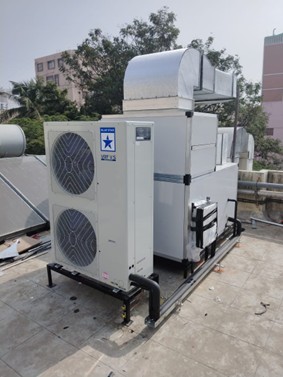
OT air is controlled for temperature, humidity, particulate matter, and microorganisms. Systems cool, dehumidify, and filter air to remove dust, microbes, gases, odour, and VOCs.
💡
Laminar Air Flow (LAF)
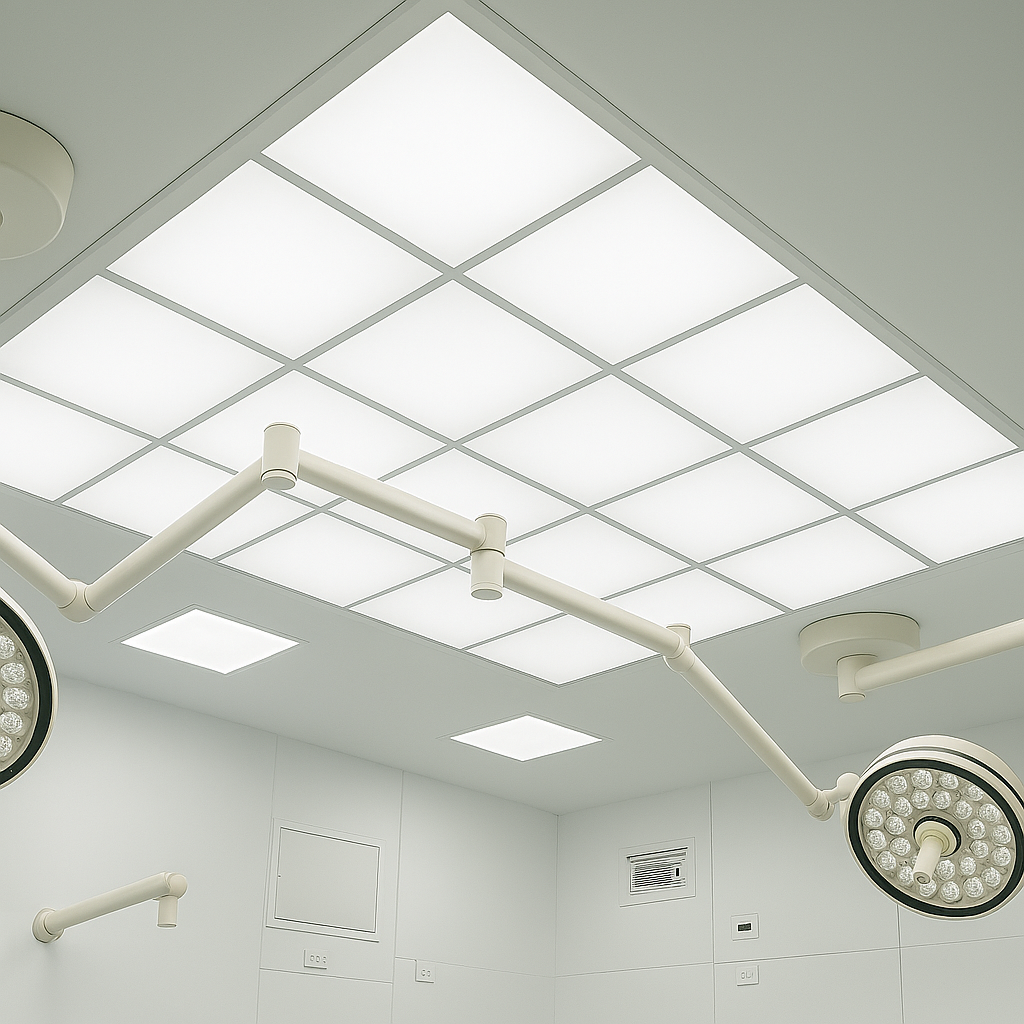
Non‑turbulent vertical airflow over operative area via HEPA filters (0.3μ, 99.99%). Plenums often integrate LED lights for shadowless illumination.
📏
Velocity Standards
Maintain 90–120 FPM airflow to carry bacterial load away from operative area. NABH and international standards recommend the same.
🧪
Air Classifications
LAF delivers CLASS 100 / ISO 5 clean air. Peripheral OT air typically falls in CLASS 10,000–100,000 depending on handler capacity and OT size.
📐
Sizes & Customization
Standard LAF sizes: 6’×2’, 6’×3’, 6’×4’, 6’×6’, 6’×8’, 8’×8’. Custom sizes available. HEPA plenums can be made in GI powder coat, aluminium powder coat, or SS304.
🌀
Filtration Stages
Air handler includes up to 5 stages: 10μ pre‑filter, UV, 5μ fine filter, optional gas‑phase filter, and final 0.3μ HEPA in plenum.
🛠️
️
Air Handler Types
Two types: floor‑mounted/suspended AHU outside OT, or ceiling‑suspended low‑pressure handler inside OT (up to 6’×4’ LAF). Both integrate fresh air and create positive pressure.
⚙️
Additional Features
Integrated air conditioning, UV treatment to eliminate microorganisms, and cascade dampers to relieve excess pressure in hermetically sealed areas.
💨 Positive Pressure System (PPS)
3‑Stage Filtration
10μ prefilter, UV, and 0.3μ HEPA (99.99%) for clean air delivery.
Cooled Air Integration
Outside air is cooled before entering to maintain internal AC balance.
Positive Pressure Creation
Filtered air increases internal pressure, pushing out contaminants.
Cascade Dampers
Relieves excess pressure in hermetically sealed areas.
Sizing Guide
15–20% of room volume. Example: 1000 ft³ → 150–200 CFM.
Standard & Custom Units
Available in 300, 500, 1000 CFM. Custom sizes on request.
🌀 Negative Pressure System (NPS)
Air Extraction for Infection Control
The Negative Pressure System works by drawing inside air, filtering it, and continuously blowing it out. As air is eliminated, the quantity inside decreases, creating negative pressure compared to adjacent areas. This restricts infected air within the room and prevents it from spreading outside.
Air released outside is filtered in three stages — 10μ prefilter, UV treatment, and 0.3μ HEPA filter at 99.99% efficiency — ensuring contamination is not released into the environment.